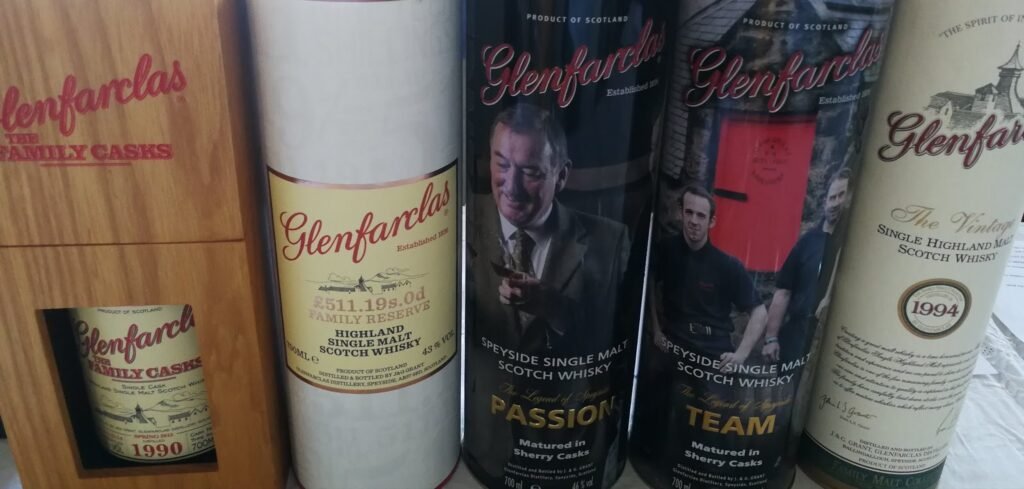
As we navigate the first quarter of 2026, the rare whisky market has moved past the “speculative fever” of the early 2020s and into what analysts are calling the Strategic Reset. For investors, this era is defined by a critical choice: the high-liquidity world of rare bottles or the high-growth, long-term maturation of the cask.
While both assets offer a hedge against inflation, their performance metrics in 2026 have diverged. Here is the data-driven breakdown of where you should allocate your capital this year.
1. The Cask Advantage: Riding the “18-Year Premiumization Cliff”
In 2026, the cask market has become the “anchor” of the spirits portfolio. Following the March 2025 WOWGR reforms, which simplified direct title transfer for private investors, cask ownership has surged in transparency.
The primary driver for cask ROI this year is the 18-Year Premiumization Cliff. This is the mathematical point where the value of a maturing spirit doesn’t just grow—it leaps.
The Math of Maturation: While 12-year-old casks are plentiful, the supply of 18-year-old stock has hit a historical low due to under-production in the late 2000s.
The Valuation Jump: Data from early 2026 shows that a cask transitioning from 17 to 18 years of age can see a 25–40% value appreciation in a single year, as it becomes eligible for the “Ultra-Premium” export bracket to the newly liberalized Indian market.
Annualized Return=(Entry ValueExit Value−Entry Value−Storage Costs)×100
With historical average returns holding steady at 12–15%, casks remain the “slow and steady” winner for 2026.
The Bottle Market: Seeking “Trophy” Stability
After the 16% volume decline seen in the secondary bottle market during 2024, Q1 2026 has brought stabilization. The “flippers” have exited, leaving a market defined by “collector-investors” who prioritize genuine rarity.
The “Mid-Range” Sweet Spot: While £50,000 “showpiece” bottles have seen softer prices, the £1,000–£10,000 segment is thriving. This is where liquidity is highest, with bottles from Springbank, Rosebank, and select Macallan releases selling within 72 hours of hitting auction platforms.
Tax Considerations: In the UK, bottled whisky remains a “wasting asset” in many jurisdictions, often exempting investors from Capital Gains Tax (CGT). However, unlike casks, bottles do not “improve” with age; their value is purely a function of market scarcity
3. Head-to-Head: 2026 Comparison
| Metric | Rare Casks (Maturing) | Rare Bottles (Finished) |
| 2025-26 Avg. ROI | 12.8% | 4.2% (Stabilizing) |
| Entry Point | £3,000+ (New Make) | £500+ (Collectible) |
| Liquidity | Low (Weeks/Months to sell) | High (Online Auctions) |
| Market Driver | Age & Quality of Spirit | Brand Equity & Rarity |
| Primary Risk | Angel’s Share (Evaporation) | Forgery & Market Volatility |
4. The 2026 Verdict: The “Hedged” Portfolio
For the 2026 investor, the “Reset” strategy is clear:
Allocate 70% to Casks: Focus on 8–12 year old stock with the intention of holding until the 18-year Cliff. This captures the organic growth of the spirit and the massive “India Alpha” demand post-April.
Allocate 30% to Bottles: Focus on “Blue Chip” labels (Macallan, Bowmore) and “Silent” legends (Port Ellen). These provide the necessary liquidity to exit quickly if other market opportunities arise.
The Bottom Line: In 2026, time is your greatest asset. While bottles capture the moment, casks capture the momentum.