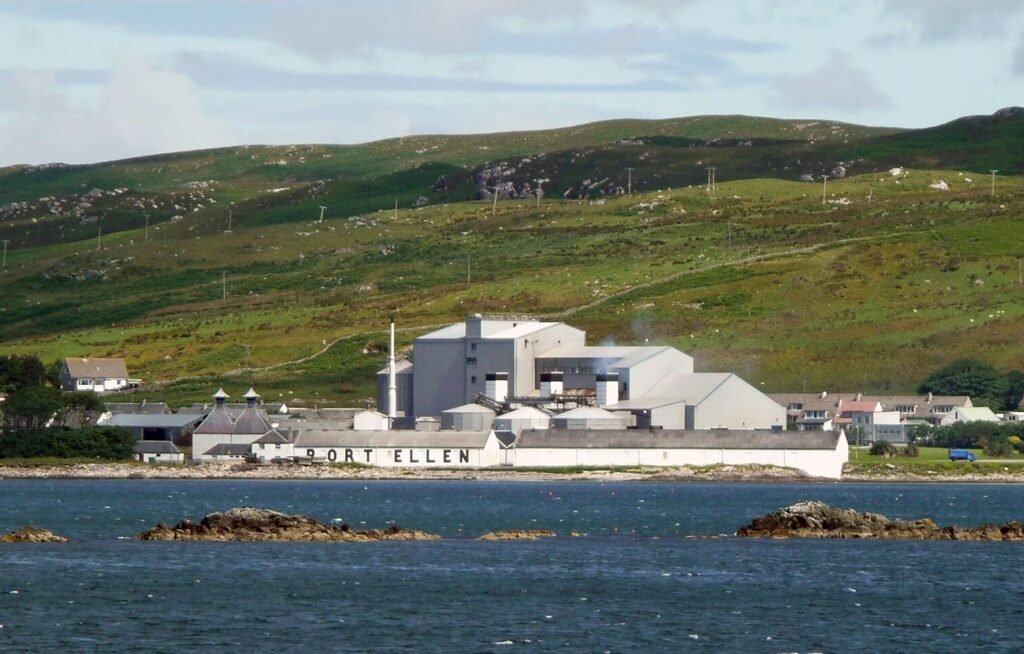
In the world of rare spirits, 1983 was a year of mourning. It was the year that two of Scotland’s most iconic “ghost” distilleries—Port Ellen on Islay and Brora in the Highlands—ceased production, seemingly forever.
Fast forward to February 2026, and the landscape has changed dramatically. Both legends have been resurrected by Diageo, with Brora celebrating nearly five years of production and Port Ellen approaching its second anniversary since its high-profile reopening in March 2024. For investors, this creates a new dilemma: Should you chase the dwindling “ghost” stocks of the 1970s, or get in on the ground floor of the modern era?
The “Ghost” Premium: Why the 1970s are a Safe Haven
Despite the stills flowing once more, the original liquid distilled before 1983 remains a finite asset. These bottles represent a “closed chapter” of liquid history that can never be replicated.
-
Absolute Scarcity: While new spirit is being made, it will not be legally “Port Ellen Whisky” (in the aged sense) for another decade or more. The remaining casks from the 1970s are reaching their “exit window”—where ABV (Alcohol by Volume) levels approach the 40% legal limit.
-
The 1970s Benchmarks: Vintages from 1972 to 1979 remain the “Blue Chips” of the market. In current February 2026 auctions, mid-range independent bottlings of Port Ellen are holding steady between £1,500 and £3,500, while ultra-aged official releases like the Gemini Set are commanding figures upwards of £45,000.
-
Performance: While the speculative “hype” market saw a correction in late 2025, these “Silent Legends” have proven to be a resilient safe haven, retaining value far better than contemporary mass-market limited editions.
The Modern Resurrection: A New Investment Class?
The reopening of these distilleries has introduced a second tier of investment.
-
Experimental Alpha: The new Port Ellen is marketed as a “distillery of experimentation.” Late 2025 saw the release of the 200th Anniversary Edition, priced at £7,500. These releases are not just whisky; they are “Foundational Assets.”
-
The “Ground Floor” Strategy: Buying the first official releases from the reopened sites is a speculative play. Historically, the “First Release” of a resurrected icon (like Glengyle or Rosebank) gains significant value as a collector’s curiosity, regardless of the liquid’s age.
Comparative Analysis: Ghost vs. Resurrected
| Feature | Original “Ghost” Stock (Pre-1983) | Modern Resurrection (Post-2021) |
| Risk Level | Low (Historical Provenance) | Medium (Market Acceptance) |
| Liquidity | High (Global Demand) | Emerging (Collector-led) |
| Investment Horizon | 3–5 Years (Finite Supply) | 10–20 Years (First Fill) |
| Feb 2026 Status | The Gold Standard | The Speculative Growth Play |
In the current “Strategic Reset” of 2026, the smart money remains on the 1970s vintages. These are the assets that the emerging Indian and Asian UHNW (Ultra-High-Net-Worth) markets are targeting as symbols of ultimate prestige.
However, do not ignore the “Foundational” releases of the new era. If you can secure an allocation of the inaugural bottlings at retail price, the “collector’s premium” is almost guaranteed as these distilleries build their new 100-year legacies.
Expert Tip: Watch for independent bottlers (Signatory, Hunter Laing, Gordon & MacPhail) who still hold 1980s casks. These often provide a 20-30% “entry discount” compared to official Diageo bottlings while offering identical liquid quality.
Stay Ahead of the Market
As the April 2026 Tariff Cliff approaches, these specific distilleries are expected to see a surge in demand from the Indian subcontinent.